Pesticides: Hours to decades
Most pesticides clear from your body within hours or days. But the persistent ones, like DDT or certain organochlorine pesticides, are a different story.
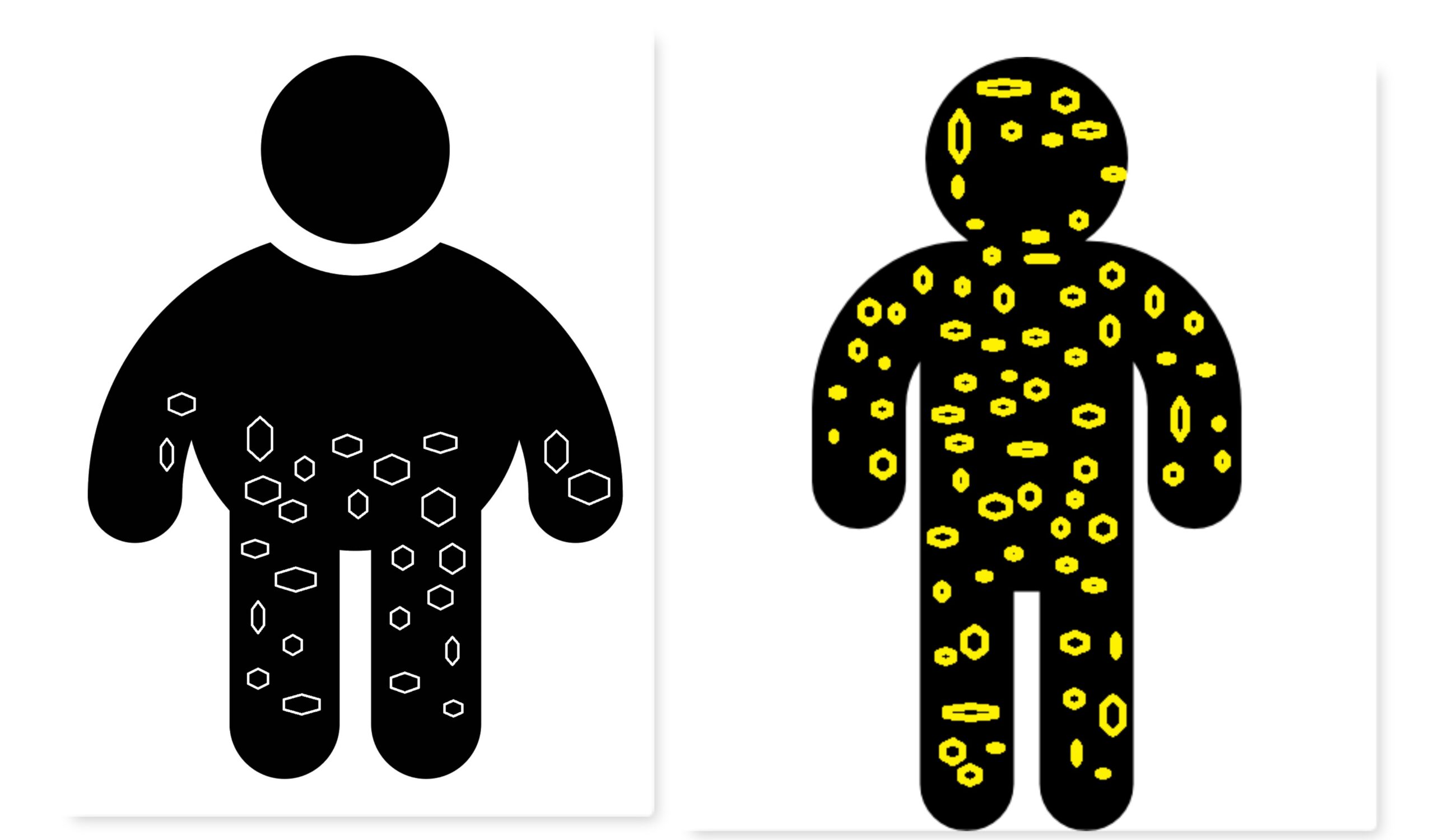
These compounds are fat-soluble and accumulate primarily in adipose (body fat), where they can persist for many years and, in some cases, decades.
Lead: Up to 30 years
Lead has a half-life of about 30 days in your blood, which sounds promising until you realize where it goes next.
More than 90 percent of the lead in your body is stored in your bones, where it has a half-life of roughly 20 to 30 years.
And scary fact, when you start to lose bone around age 50, that lead is released from the bone and right into your bloodstream and brain. The causes of dementia start to take on new meaning…
Mercury: 40-90 days in blood, years in brain tissue
Mercury from fish consumption has a blood half-life of about 40-90 days.
But methylmercury crosses the blood-brain barrier and accumulates in brain tissue, where it can persist for years.
Mercury from sources like dental amalgams continuously releases vapor that can be absorbed and may remain in your tissues for decades.
Cadmium: 10-30 years
Cadmium is one of the longest-lasting toxins in the human body, with a biological half-life of 10-30 years in the kidneys.
Research shows that cadmium concentrations increase with age because the body has no effective mechanism for eliminating it.
Even low-level chronic exposure from cigarette smoke or contaminated foods leads to significant accumulation over decades.
Persistent organic pollutants (POPs): 4-12 years or more
Even though many of these chemicals were banned decades ago, they’re still detectable in nearly everyone.
POPs like PCBs, DDT, and dioxins accumulate in your adipose (brown) fat tissue. These compounds have half-lives ranging from 4 to 12 years or longer.
PFAS (forever chemicals): 2-8 years
PFAS don’t get the nickname forever chemicals for nothing.
Different PFAS leave the body at different speeds, but PFOS, one of the most common, has a half-life of about 5.4 years in human blood.
That means even if exposure stops today, it can take many years for levels to meaningfully come down.
And these chemicals don’t hide in fat the same way older toxins do. They bind tightly to proteins in your blood and organs, which makes them especially hard to get rid of.
Why Your Body Can’t Just Detox On Its Own
Your liver and kidneys are designed to process and eliminate toxins.
But they evolved to handle natural substances, not the synthetic chemicals and heavy metals we’re exposed to today.
When toxins are fat-soluble or bind tightly to proteins and tissues, your body’s normal detoxification pathways can’t reach them effectively.
They get stored away in bones, fat, organs, and even brain tissue, where they continue causing oxidative stress, inflammation, and cellular damage for years.
This is why people can feel worse during weight loss or periods of stress.
As stored fat breaks down or bones release minerals, those sequestered toxins flood back into circulation.
The Right Way to Remove Deeply Embedded Toxins
Getting these persistent toxins out of your tissues requires a systematic approach.
You can’t just drink a green smoothie or do a weekend cleanse and expect results.
There’s an actual process to doing this effectively. And a specific order to the steps.
Skip or rush one, and you’re just moving toxins around your body instead of eliminating them.
If you’ve been exposed to environmental toxins over the years and suspect they’re still affecting your health, it’s time to work with someone who understands how to safely remove them from deep tissue storage.
You don’t have to live with the accumulated toxic burden of decades.
But you do need a strategic approach to get it out safely.